‘Design Principles’
—Alexander Shvets, “Dive Into Design Patterns”
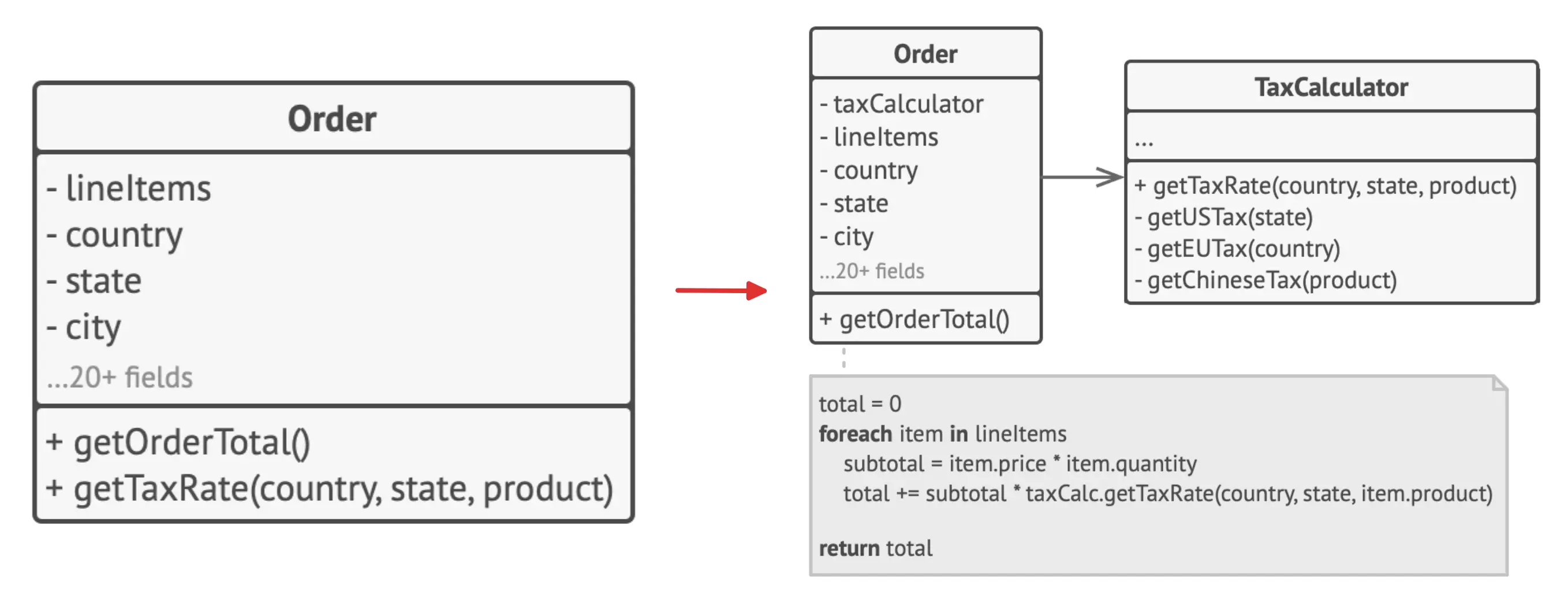
Encapsulate what varies
This principle emphasizes the importance of identifying and isolating aspects of an application that are likely to change, separating them from the stable components.
The analogy of a ship illustrates this concept: just as a ship can be divided into independent compartments to limit damage from underwater mines, a program can be structured into independent modules. This isolation protects the rest of the code from negative impacts when changes occur. By minimizing the effects of changes, you reduce the time spent fixing issues and increase the time available for implementing new features.
- Encapsulation on a method level
- Encapsulation on a class level
Program to an Interface, not an Implementation
oop - What does “program to interfaces, not implementations” mean? - Stack Overflow
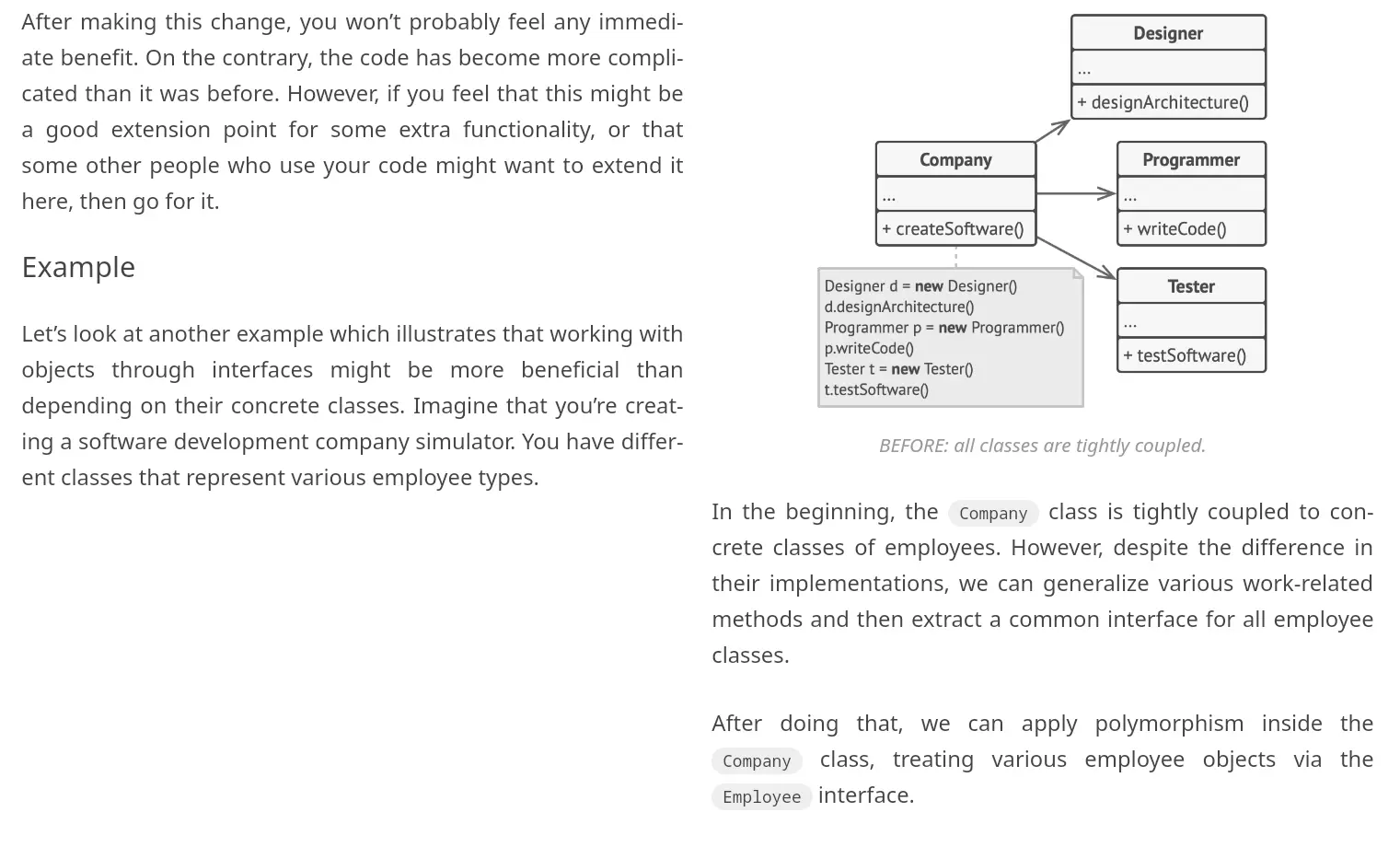
Interfaces are just contracts or signatures and they don’t know anything about implementations.
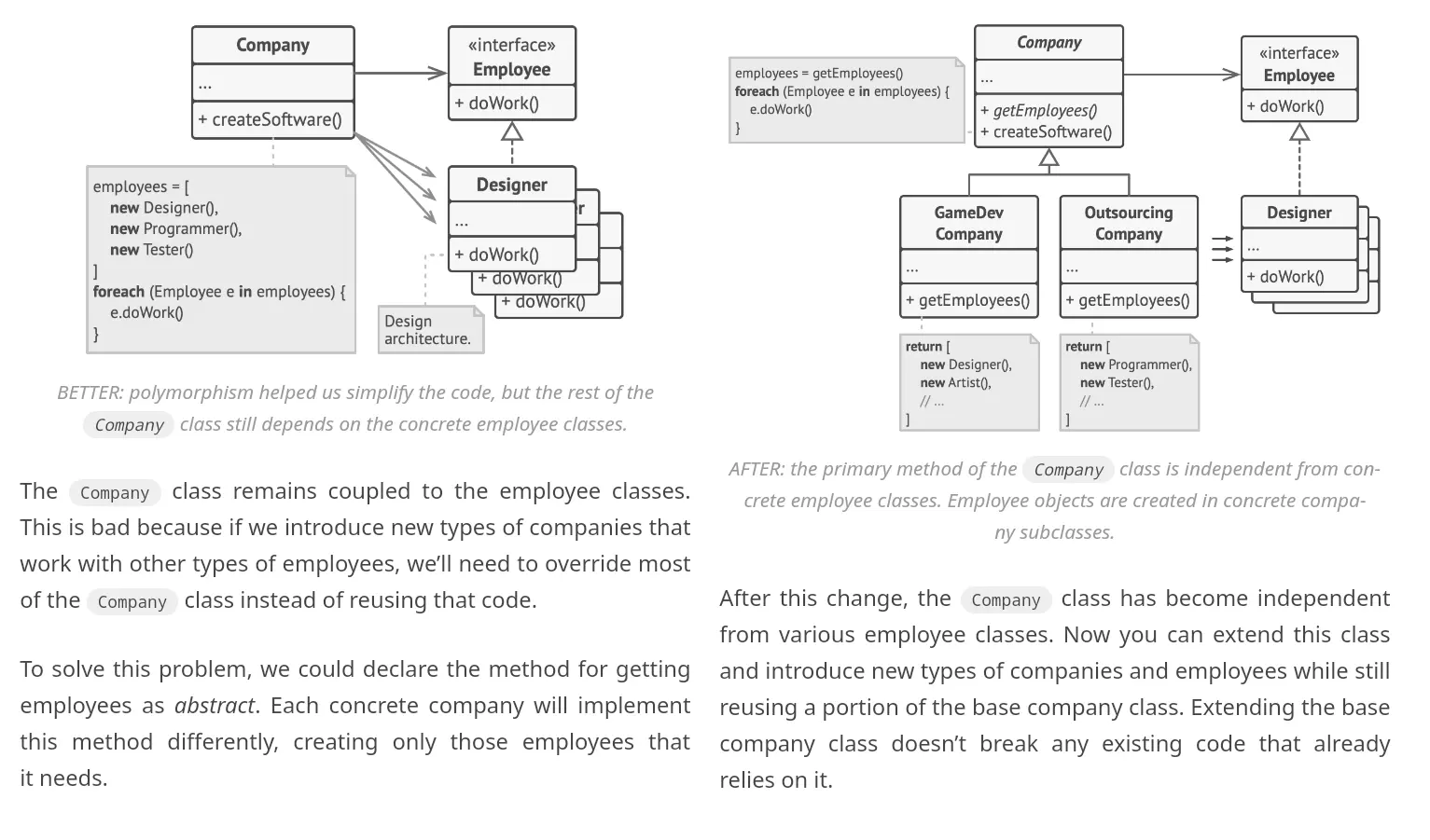
Program to an interface, not an implementation. Depend on abstractions, not on concrete classes.
It means that you should try to write your code so it uses an abstraction (abstract class or interface) instead of the implementation directly.
Example
If you have a cache interface, for example, your application will consume it without worrying if it’s a memory, file, Redis or memcached cache implementation behind it.
👉 AF01.4 - Liskov Substitution Principle
Favor Composition over Inheritance
language agnostic - Prefer composition over inheritance? - Stack Overflow
01/SA/OOP Revisit > Composition
Inheritance Problems
- A subclass can’t reduce the interface of the superclass.
- When overriding methods you need to make sure that the new behavior is compatible with base one.
- Inheritance breaks encapsulation of the superclass.
- Sub-classes are tightly coupled to super-classes.
- Trying to reuse code through inheritance can lead to creating parallel inheritance hierarchies.
Whereas inheritance represents the “is a” relationship between classes (a car is a transport), composition represents the “has a” relationship (a car has an engine).
Diamond Problem in Java - GeeksforGeeks
Inheritance
class Animal {
  speak() {
    console.log("Some generic sound");
  }
}

class Dog extends Animal {
  speak() {
    console.log("Woof!");
  }
}

class Cat extends Animal {
  speak() {
    console.log("Meow!");
  }
}

const dog = new Dog();
dog.speak(); // Woof!

const cat = new Cat();
cat.speak(); // Meow!
Composition
// Behavior modules
const speakBark = {
  speak() {
    console.log("Woof!");
  },
};

const speakMeow = {
  speak() {
    console.log("Meow!");
  },
};

const runFast = {
  run() {
    console.log("Running fast!");
  },
};

const swimWell = {
  swim() {
    console.log("Swimming well!");
  },
};

// Composing objects with behaviors
class Animal {
  constructor(name, behaviors) {
    this.name = name;
    Object.assign(this, behaviors);
  }
}

const dog = new Animal("Dog", { ...speakBark, ...runFast });
dog.speak(); // Woof!
dog.run();   // Running fast!

const cat = new Animal("Cat", { ...speakMeow });
cat.speak(); // Meow!