Circuit Breaker Pattern (Design Patterns for Microservices) | by Hasitha Subhashana | Geek Culture | Medium
Release It Design and Deploy Production-Ready Software, Chapter 5: Stability Pattern - Michael T. Nygard
Circuit Breakers prevent Cascading Failures. (💡Like SQL Cascade)
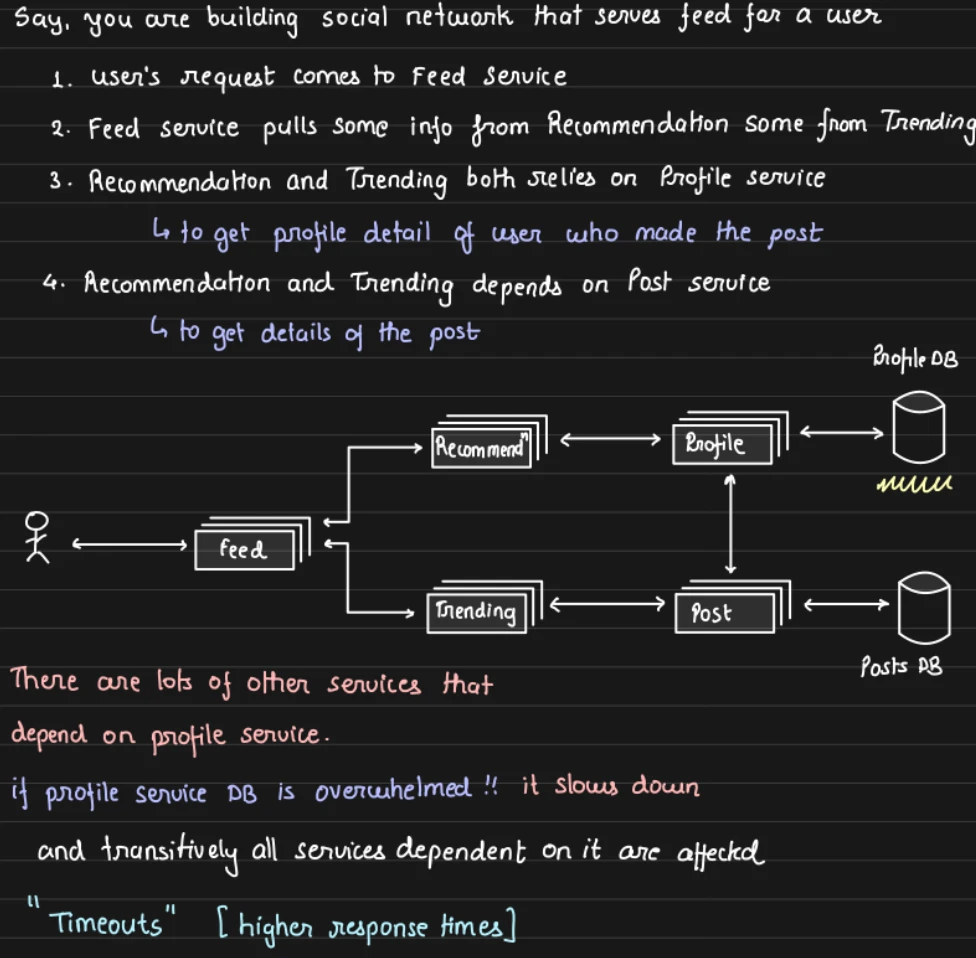
Circuit breaker is a mechanism that stops a client repeatedly attempting an operation that is likely to fail.
If a service is failing repeatedly, the circuit “breaks” the connection temporarily to stop more failures and allow the system to recover.
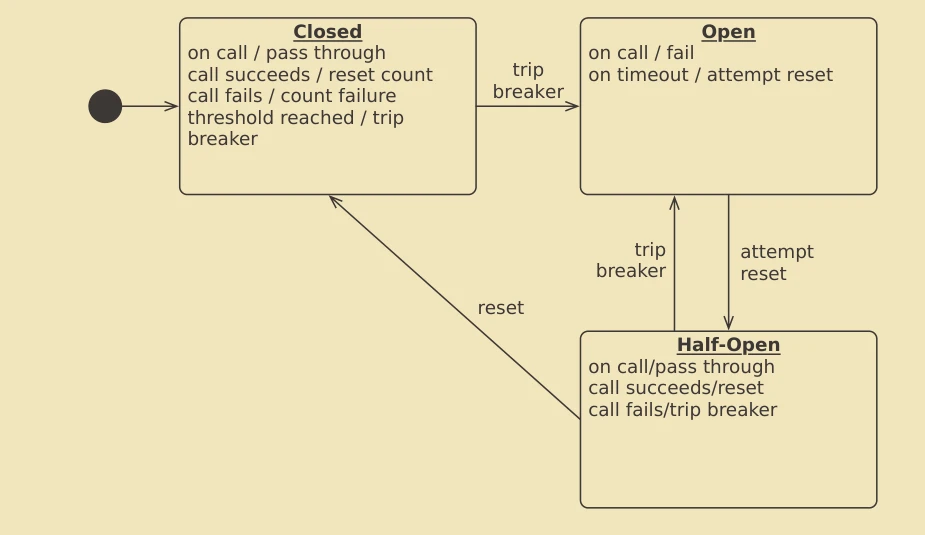
With respect to downstream services, a circuit breaker calculates the number of requests that failed within a recent interval. If an error thresh- old is exceeded, the client stops calling downstream services. Sometime later, the client attempts a limited number of requests. If they are successful, the client assumes that the failure is resolved and resumes sending requests without restrictions.
stateDiagram-v2
    [*] --> Closed
    Closed --> Open: Failures exceed threshold
    Open --> HalfOpen: After timeout
    HalfOpen --> Closed: If next call succeeds
    HalfOpen --> Open: If next call fails

    Open --> Closed: Manual reset (optional)
Example Scenario
- Service A calls Service B.
- Service B is slow or down.
- Circuit breaker detects repeated timeouts/errors.
- Circuit opens — now Service A instantly fails requests to B (or uses fallback).
- After some time, a few requests go through (half-open).
- If they succeed, circuit closes again.
Circuit Breakers Implementation
How is it implemented ?
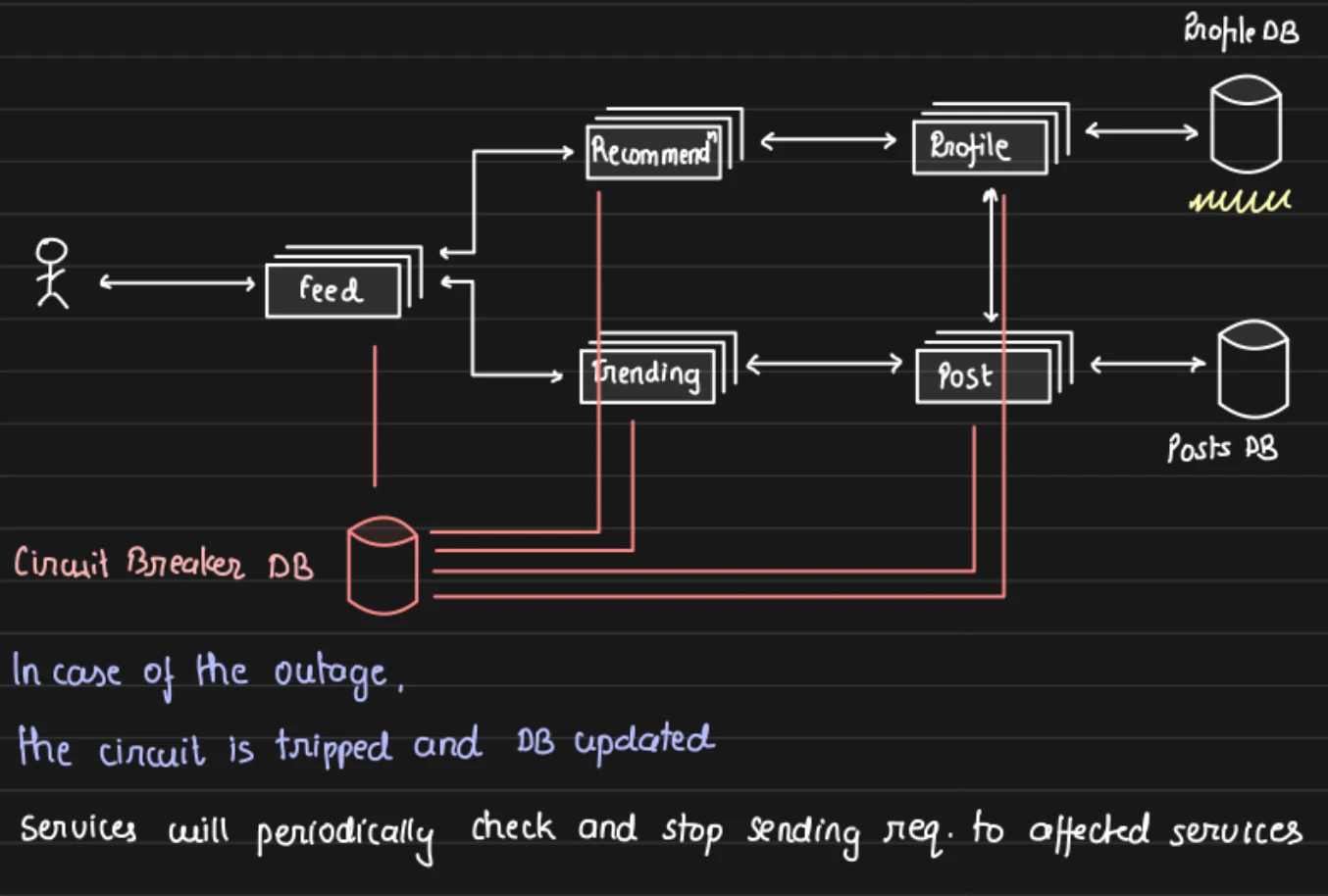
- A common database holds the settings for each breaker.
- Services, before making call to others, checks the config
- Cache the config to avoid checking the DB
Using Libraries in Production
If you want more powerful and configurable circuit breakers, use: