llm ai/llm reading/researchpaper
Core Idea
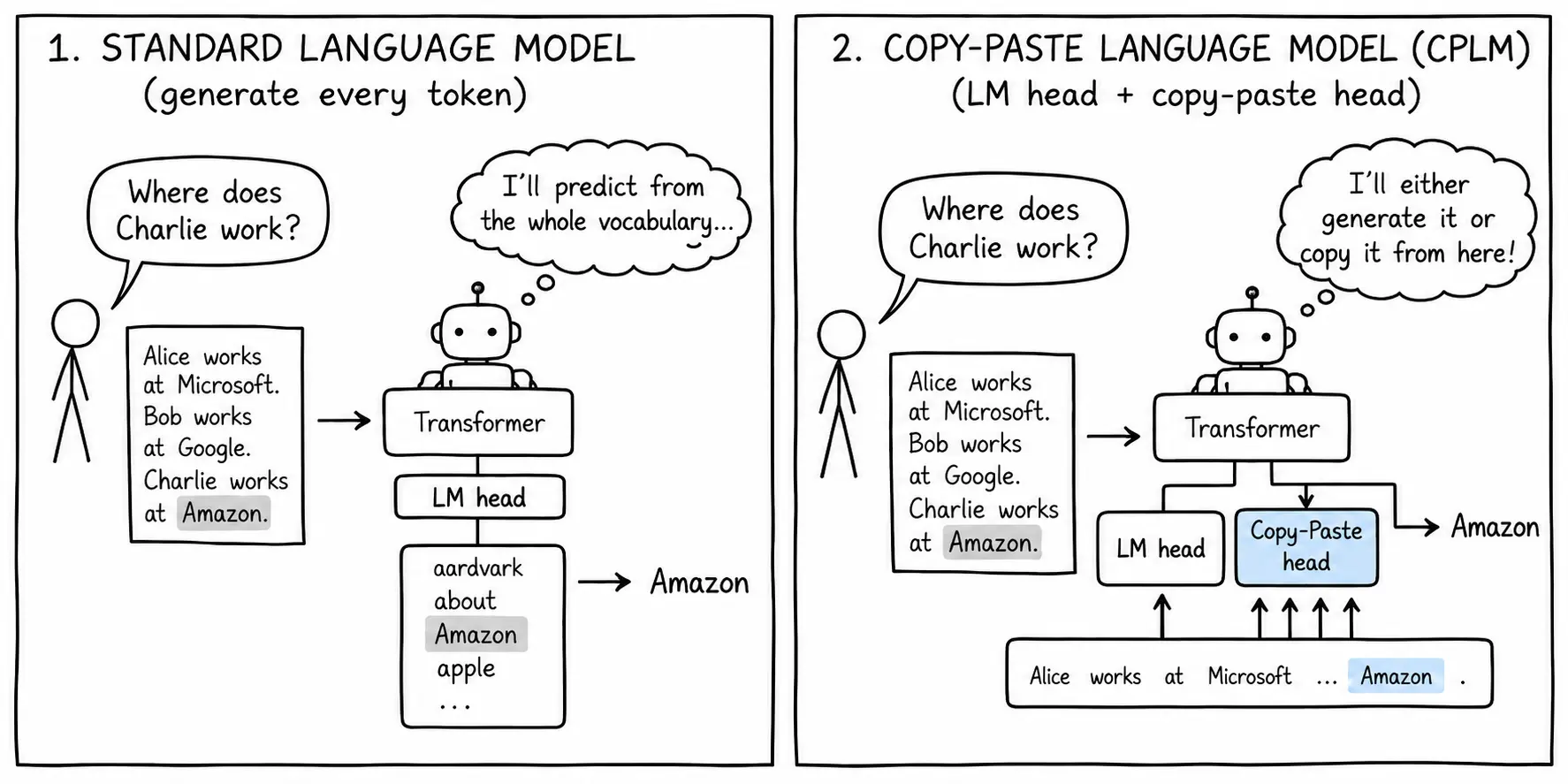
Instead of making AI generate every word from scratch, let it directly copy relevant words from earlier text.
The problem: Traditional language models waste computational effort generating words that already exist in their context. This also makes training less efficient.
The solution: Researchers introduce a Copy-Paste head, giving AI two options:
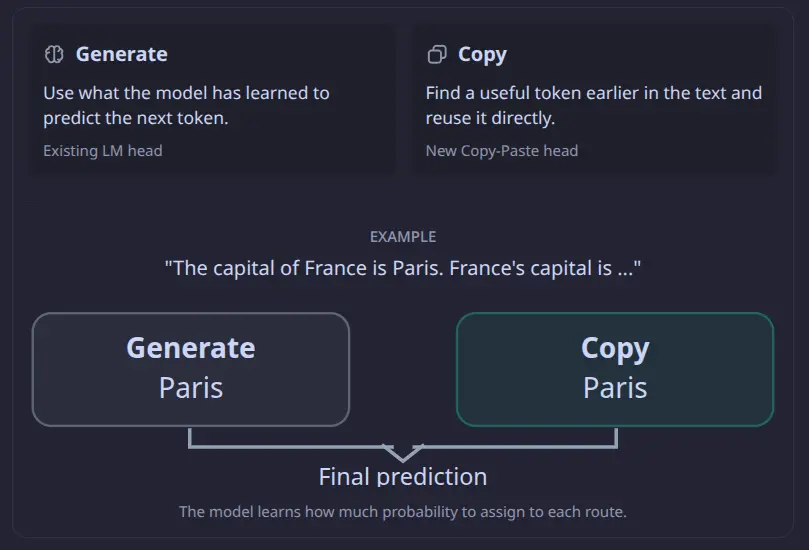
- Generate a new token using learned knowledge.
- Copy a token directly from earlier text.
The model automatically learns when to use each option.
Introduction
What if AI could simply copy what it already knows instead of generating every word from scratch?
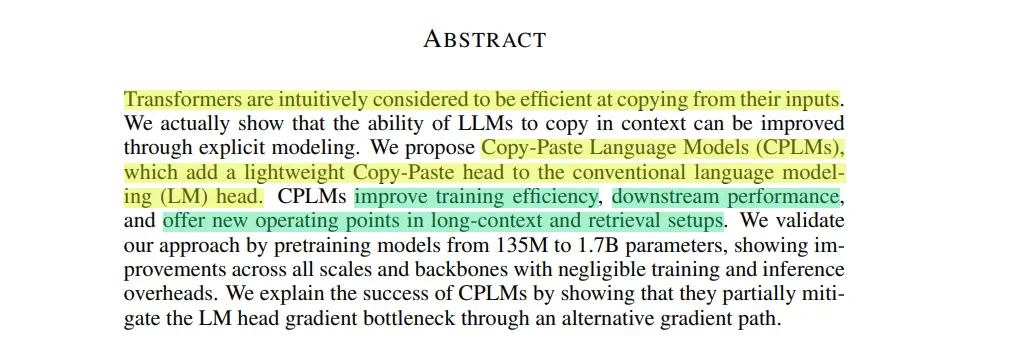
That’s the idea behind Copy-Paste Language Models (CPLMs). By adding a simple mechanism to copy tokens from earlier text, researchers show that language models can learn faster, perform better on reasoning-related tasks, and retrieve information more effectively from long documents, all with minimal computational overhead.
What problem are researchers trying to solve?
Alice works at Microsoft. Bob works at Google. Charlie works at Amazon.
Question: Where does Charlie work?The answer is Amazon.
A human can look back, find Charlie and copy “Amazon.”
A conventional language model can pay attention to the earlier sentence, but its final prediction generally goes through a mechanism that assigns probabilities to words or word pieces in its entire vocabulary.
That is a bit like giving someone a document containing the answer, but insisting that they must answer using a giant multiple-choice dictionary instead of directly selecting the word from the document.
Repeated tokens
The researchers report that approximately 60% of the tokens in one commonly used AI training dataset have already appeared within the preceding 4,000-token context.
Typical language models don’t have a dedicated mechanism at the output stage for copying those tokens.
Solution
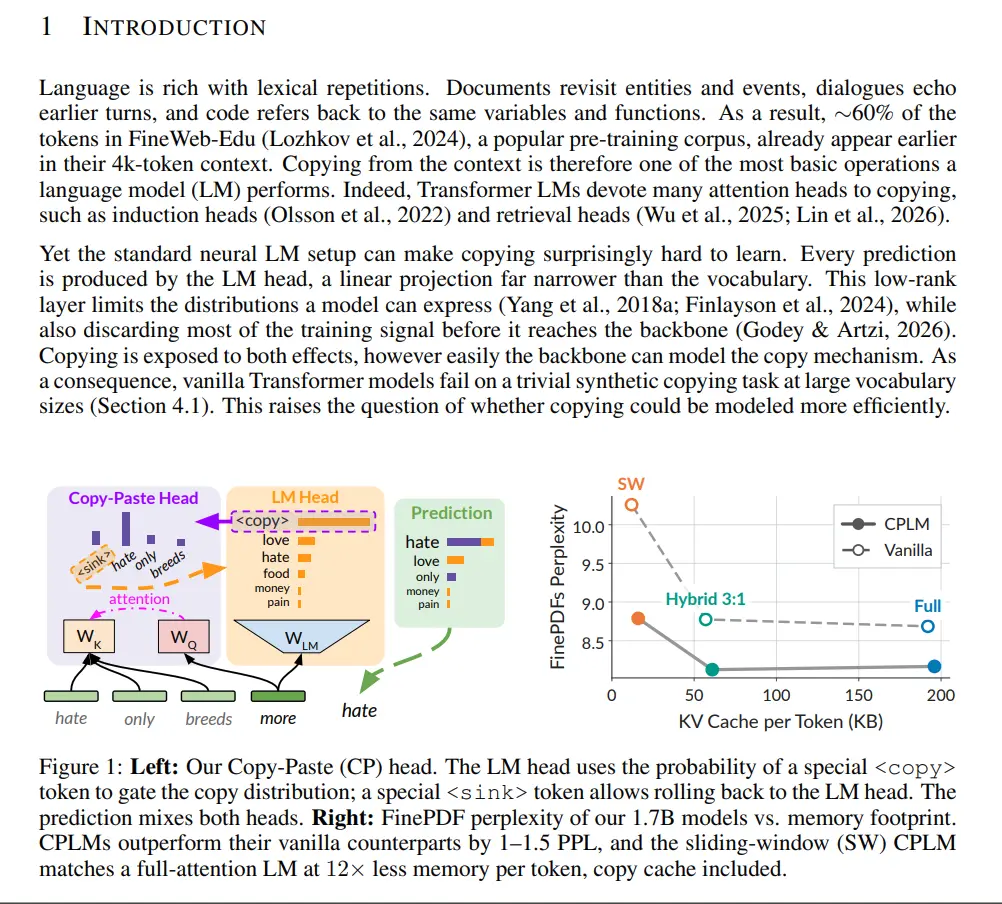
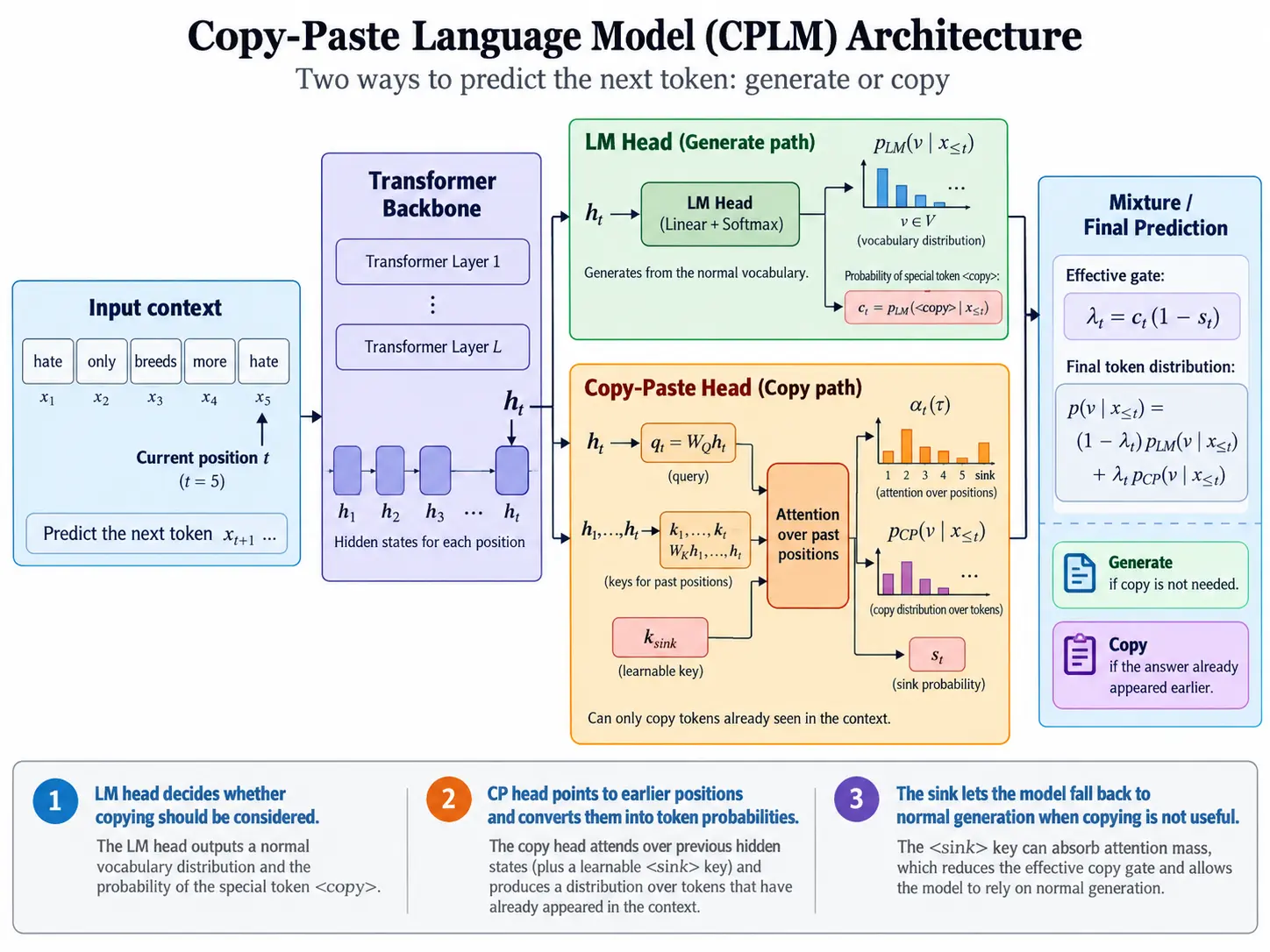
A typical language model has one main mechanism for predicting its next token, called the LM head. The researchers add a second mechanism, called the Copy-Paste head.
How does it decide when to copy?
The researchers introduce two special internal signals:
<copy>: The model decides how strongly it should consider copying from earlier text.<sink>: Lets the copying mechanism fall back to ordinary generation if it cannot find a useful previous token.
The model combines probabilities from both mechanisms to make its prediction.
Nobody has to manually teach it which words to copy. It learns this during ordinary language-model training, through feedback about how accurate its predictions are.
Experiments
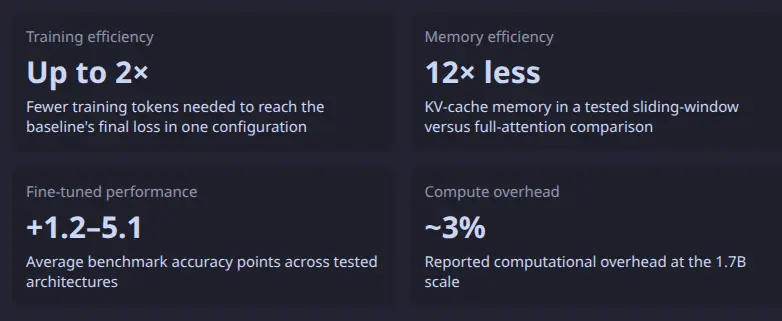
The researchers trained models ranging from 135 million to 1.7 billion parameters, using different architectures, and compared ordinary models against models equipped with the Copy-Paste head.
1. An Introduction to LLM
2. Tokens and Embeddings
Attention is All You Need (Transformers)